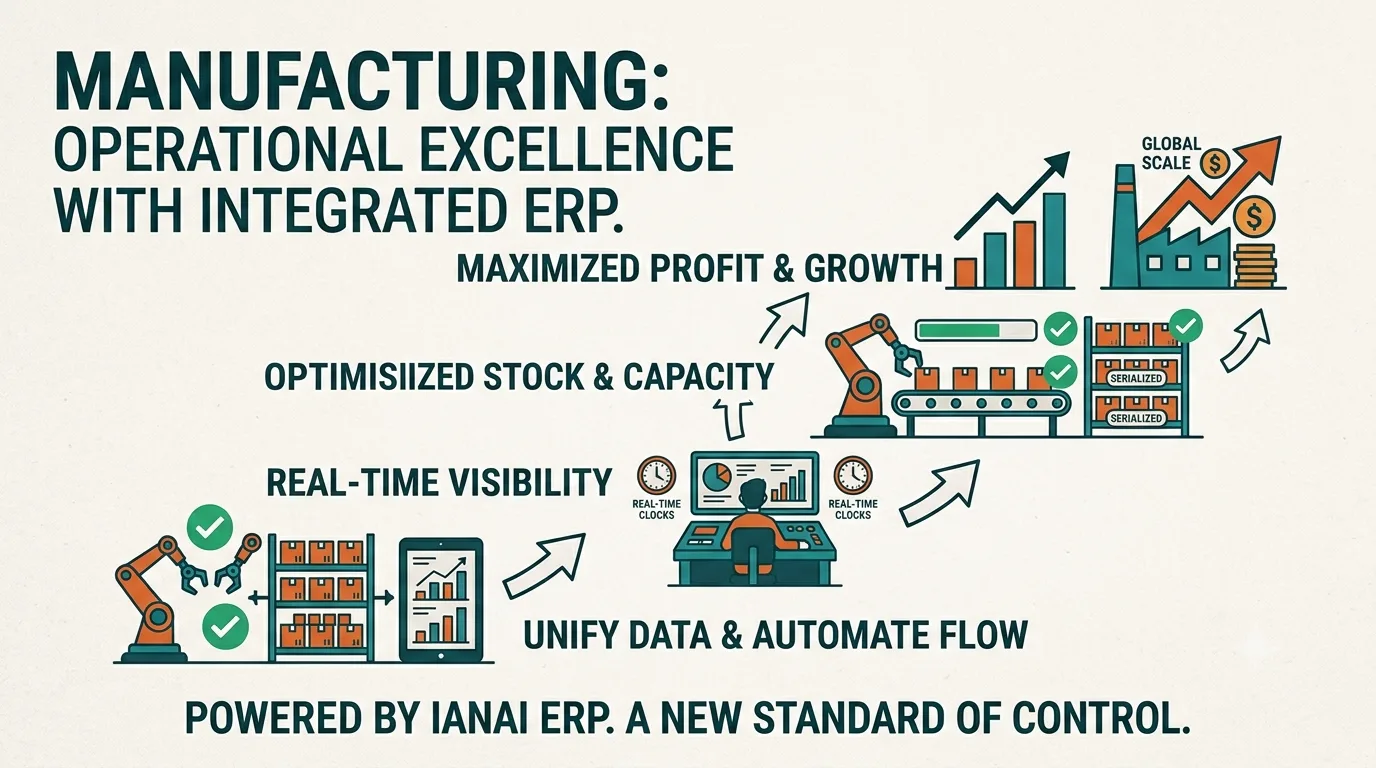
For many small-to-midsize manufacturers, daily operations feel like a constant battle against operational friction. A critical order is held up by a surprise material shortage, the production schedule lives in a spreadsheet that's instantly out of date, and the finance team is still trying to figure out if the last big job was actually profitable. These aren't isolated incidents; they're symptoms of deeper, systemic challenges that manual processes and disconnected software can't solve.
This post breaks down the most common challenges modern manufacturers face—from the shop floor to the front office—and explains how an integrated Enterprise Resource Planning (ERP) system provides a practical, powerful solution.
The High Cost of Disconnected Operations
Many growing manufacturers run on a patchwork of tools: accounting software, inventory spreadsheets, and a standalone app for order entry. While each tool might handle its specific task, the lack of connection between them creates data silos. This fragmentation is the root cause of several persistent problems.
Challenge 1: Constant Production Delays
Production delays are one of the biggest issues for manufacturers, impacting everything from customer satisfaction to profitability. A study by SME and Laserfiche found that a majority of manufacturers experience work delays related to inventory data, equipment effectiveness, and manufacturing throughput. These delays often stem from a few core issues:
- Material Shortages: Production teams discover they don't have the necessary raw materials only when a job is about to start. This triggers frantic calls to suppliers and brings the line to a halt.
- Poor Scheduling: Without a real-time view of machine capacity and labor availability, schedules are based on guesswork. One machine gets overloaded while another sits idle, creating bottlenecks that ripple through the entire production process.
- Lack of Visibility: When a customer calls for a status update, the sales team has to chase down the production manager, who has to check the whiteboard on the shop floor. This manual, reactive communication wastes time and looks unprofessional.
How an ERP Solves Production Delays
An ERP system integrates production planning, inventory management, and procurement into a single source of truth.
- Real-Time Inventory Data: Everyone from purchasing to production can see current stock levels. The system automatically flags when materials are running low based on upcoming production orders, preventing shortages before they happen.
- Accurate Capacity Planning: ERPs provide a clear view of resource availability, allowing for realistic production schedules that optimize machine and labor usage, preventing bottlenecks.
- Centralized Information: When sales, production, and shipping all work from the same live data, coordination becomes seamless. Customer updates are instant and accurate, and everyone is aligned on priorities.
Inaccurate Inventory and Its Ripple Effects
Inefficient inventory management hurts your business by tying up cash, risking stockouts, and creating waste. When you rely on spreadsheets or periodic manual counts, you're always working with outdated information, leading to costly mistakes.
Challenge 2: Poor Inventory Control
Without a unified system, inventory control is a major struggle. Common symptoms include:
- Stockouts and Overstocking: Guesswork leads to having too much of what you don't need (excess carrying costs) and not enough of what you do (lost sales and production stoppages).
- Inaccurate Costing: If you don't know the true cost of your raw materials, including freight and duties (landed cost), you can't accurately price your finished goods, which erodes profit margins.
- Wasted Time: Employees spend hours manually counting stock or searching for misplaced items instead of focusing on value-added tasks.
How an ERP Delivers Inventory Accuracy
An ERP with strong inventory management capabilities transforms how you handle stock.
- Automated Tracking: Inventory levels are updated automatically in real time as materials are received, moved, consumed in production, and shipped to customers.
- Demand Forecasting: By analyzing historical sales data and current orders, the system helps you forecast future demand more accurately, leading to optimized stock levels.
- Lot and Serial Tracking: For manufacturers needing detailed traceability, an ERP can track specific lots or serial numbers from raw material receipt to finished product delivery, simplifying quality control and compliance.
The Inefficiency of Manual Processes
Manual processes are not just slow; they're unsustainable for a growing business. Relying on paper-based work orders, manual data entry, and email-based approvals introduces errors, consumes valuable time, and makes it impossible to scale efficiently.
Challenge 3: Operational Drag from Manual Work
Manual workflows create hidden costs and operational drag that quietly drain profitability.
- Human Error: Manually entering the same data into multiple systems (e.g., from a sales order into a production worksheet and then into an invoice) inevitably leads to costly mistakes.
- Slow Decision-Making: When managers have to compile reports from different spreadsheets, the data is often outdated by the time they get it. This means critical decisions are based on lagging indicators, not real-time facts.
- Lack of Standardization: Different teams or shifts may follow slightly different processes, leading to inconsistent quality and unpredictable outcomes.
How an ERP Automates and Streamlines Operations
ERP systems are designed to automate repetitive tasks and enforce standardized workflows across the organization.
- Workflow Automation: An ERP can automate everything from generating purchase orders when stock is low to sending invoices when an order ships. This frees up your team to focus on more strategic work.
- Integrated Financials: As production activities occur, the financial data is updated automatically. You can see the real-time profitability of a job or product line without waiting for month-end closing.
- Real-Time Reporting: With all your data in one place, you can generate accurate, up-to-the-minute reports and dashboards. This gives leaders the visibility they need to spot trends, identify issues, and make proactive, data-driven decisions.
Moving from Reactive to Proactive with ERP
The challenges of production delays, inventory inaccuracies, and manual processes are all symptoms of a disconnected, low-visibility environment. Trying to solve them one by one is like playing whack-a-mole. An ERP system addresses the root cause by creating a single, integrated platform that connects every part of your manufacturing business.
By unifying your data and processes, an ERP helps you move from a reactive state of constant firefighting to a proactive state of control and optimization. You can anticipate material needs, schedule production intelligently, and make decisions based on what's happening in your business right now—not last week.
Ready to see how a modern ERP can solve your operational challenges? Explore our resources at the ianaiERP User Guide or contact us to speak with an expert.