What Is Landed Cost? (And Why Spreadsheets Aren't Enough)
If you ask most finance or operations leaders for the cost of a product, they'll likely quote the price on the supplier's invoice. But that's only part of the story. The true cost of your inventory includes every expense incurred to get that product from the factory floor to your warehouse door. This all-in figure is called the landed cost.
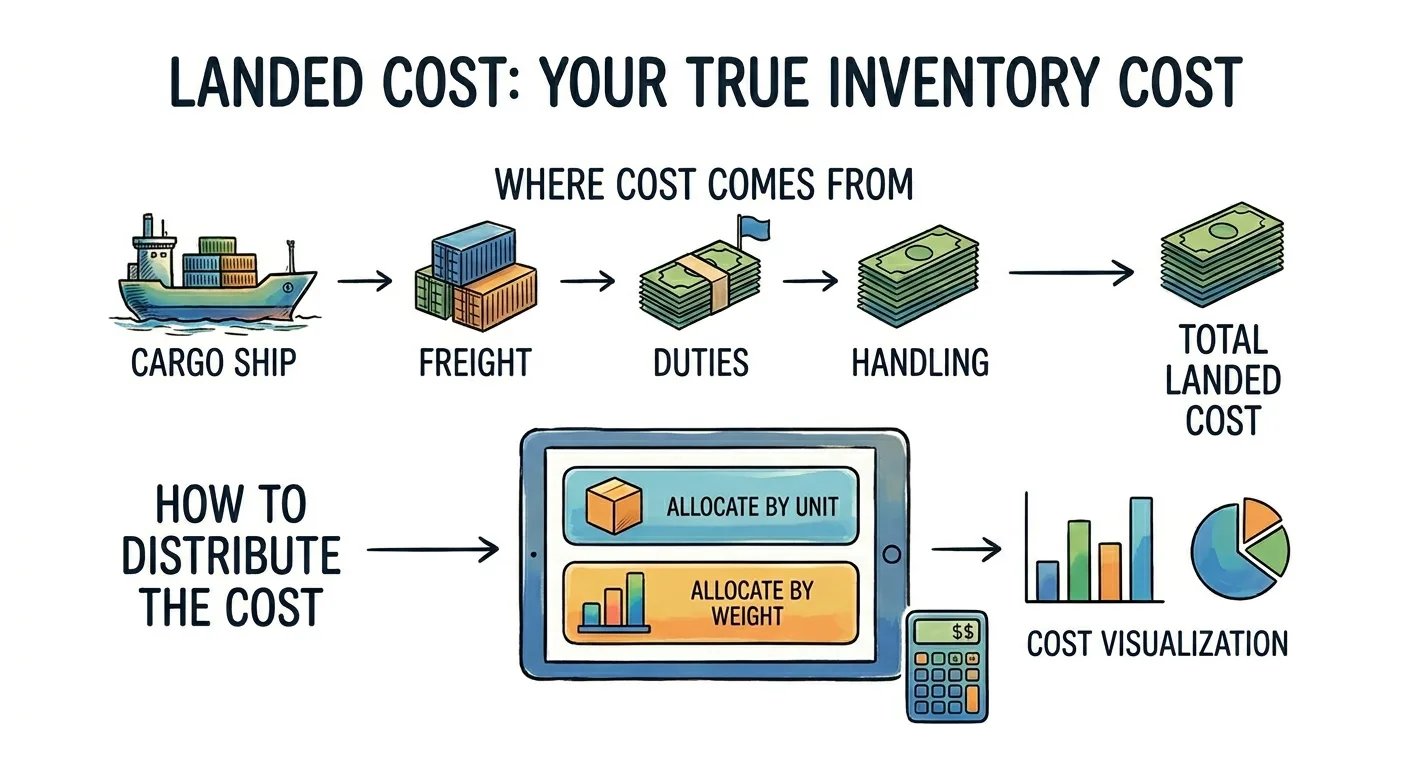
In simple terms, landed cost represents the total investment required to acquire a product. It moves beyond the purchase price to include a wide range of associated expenses like shipping, customs, insurance, and handling fees. Ignoring these costs means you're making critical business decisions—from pricing to purchasing—based on incomplete and inaccurate data. Without a clear view of your landed cost, you can't know if a product is truly profitable.
Many businesses attempt to track these expenses in spreadsheets, but this approach is fraught with problems. Manual data entry is prone to human error, invoices for different cost components arrive weeks apart, and allocating shared costs across thousands of SKUs in a single shipment becomes a complex, time-consuming nightmare. This method is not only inefficient but also fails to provide the real-time visibility needed in today's volatile supply chain environment.
The Components of a Landed Cost Calculation
Accurately calculating landed cost requires you to identify and sum all relevant expenses. While the specific components can vary by shipment and geography, they generally fall into these key categories:
Product Cost
This is the straightforward starting point: the price you paid the supplier or manufacturer for the goods. It's the number on the commercial invoice and the foundation of the entire calculation.
Shipping and Freight
This category includes all costs associated with moving the goods from the point of origin to your destination. It can encompass ocean or air freight, domestic transportation (drayage), fuel surcharges, and other carrier fees.
Customs, Duties, and Taxes
When goods cross international borders, government-imposed fees are unavoidable. These can include:
- Customs Duties & Tariffs: Taxes based on the product's classification (HS code) and country of origin.
- Taxes: Value-Added Tax (VAT) or Goods and Services Tax (GST) that may be levied on imported goods.
- Brokerage Fees: Payments to customs brokers for managing the clearance process.
Risk and Insurance
This covers the cost of protecting your investment during transit. It includes cargo insurance premiums paid to cover potential damage, theft, or loss. It can also involve quality assurance inspections or compliance fees.
Overhead and Handling
This is a catch-all for various smaller fees that can add up, such as:
- Port and Handling Fees: Charges for loading, unloading, and processing at ports or terminals.
- Bank and Payment Fees: Costs associated with currency conversion or processing payments to international suppliers.
- Wharfage and Storage: Fees for using port facilities or temporary storage.
The Strategic Impact of Accurate Landed Cost Tracking
Understanding your true landed cost isn't just an accounting exercise; it's a strategic necessity that directly impacts profitability and competitiveness. When you have a firm grasp on these numbers, you can:
- Set Smarter Prices: Pricing products based only on the supplier cost can lead to razor-thin or even negative profit margins. Accurate landed cost data ensures your pricing strategy covers all expenses and achieves target profitability.
- Improve Profitability Analysis: Gain a true understanding of which products, suppliers, and shipping routes are the most profitable. This visibility allows you to make data-driven decisions to optimize your sourcing and logistics strategies.
- Make Better Sourcing Decisions: A cheaper supplier on paper may not be the most cost-effective choice once freight and duties are factored in. Comparing the total landed cost from different suppliers provides a more accurate picture for procurement teams.
- Ensure Accurate Financial Reporting: Understating inventory value on your balance sheet can lead to compliance issues and a distorted view of your company's financial health. Proper landed cost accounting ensures your Cost of Goods Sold (COGS) is accurate.
How an ERP Automates Landed Cost Calculation
The complexity and dynamic nature of landed cost components make it a perfect process for automation within a cloud ERP platform. Instead of wrestling with disconnected spreadsheets, an ERP provides a single, integrated system to manage the entire process.
A modern ERP system like ianaiERP automates landed cost tracking by:
- Centralizing Cost Data: It captures all associated costs—from freight invoices to customs brokerage fees—and links them directly to the corresponding purchase order or inventory receipt. This eliminates data silos and manual reconciliation.
- Offering Flexible Allocation Methods: Not all costs should be divided equally. An ERP can automatically allocate, or prorate, expenses across the items in a shipment based on quantity, value, weight, or volume. This ensures each item's cost is updated accurately.
- Providing Real-Time Inventory Valuation: As soon as landed costs are applied, the system automatically updates the inventory value. This means your COGS and gross margin reporting are always based on the most current, accurate data available.
- Integrating with Purchasing and Finance: The entire workflow is connected. Landed costs are applied within the purchase order management system and flow seamlessly into your general ledger, providing a complete audit trail without duplicate data entry.
By automating these complex calculations, an ERP saves countless hours for your finance and operations teams, reduces the risk of costly errors, and provides the critical visibility needed to protect your margins.
Ready to get a true picture of your product profitability? Learn more about how a modern ERP can transform your operations by exploring our user guides or contact us for a demo.