What Is Reverse Logistics?
Reverse logistics is the process of moving goods from their final point of consumption back through the supply chain to recapture value or ensure proper disposal. Unlike traditional (or forward) logistics, which follows a predictable flow from producer to consumer, reverse logistics is often unpredictable and complex. It includes everything from customer returns and warranty repairs to product recalls and end-of-life recycling.
The rise of e-commerce has put a massive spotlight on this business function. With average e-commerce return rates hovering around 20%, manufacturers and brands can no longer treat returns as an afterthought. A poorly managed returns process doesn’t just hurt your bottom line; it can damage customer loyalty and create operational chaos.
This guide covers the core challenges of reverse logistics, the key stages of an effective returns process, and how a modern ERP system provides the visibility and control needed to manage it effectively.
The High Cost of Inefficient Reverse Logistics
When managed poorly, reverse logistics becomes a significant drain on resources. The cost to process a single return can be 20% to 65% of the product’s original value, factoring in everything from shipping to labor. These costs are often hidden across multiple departments, making them difficult to track.
The challenges are multifaceted:
- Financial Drain: Costs accumulate at every step, including return shipping, customer service labor, warehouse processing and inspection, and restocking or disposal. These expenses directly erode profit margins.
- Inventory Chaos: Without a clear system, returned products can pile up, leading to inaccurate stock counts and warehouse bottlenecks. You lose visibility into what's available for resale, what needs repair, and what should be scrapped, making it impossible to manage inventory effectively.
- Operational Complexity: The sheer unpredictability of returns makes planning difficult. Volume can spike without warning, and returned products arrive in mixed conditions, each requiring a different workflow for inspection and disposition.
- Poor Customer Experience: A slow, confusing, or rigid returns process can deter future purchases. In today's competitive market, a hassle-free return experience is a key driver of customer loyalty.
Key Stages of the Reverse Logistics Process
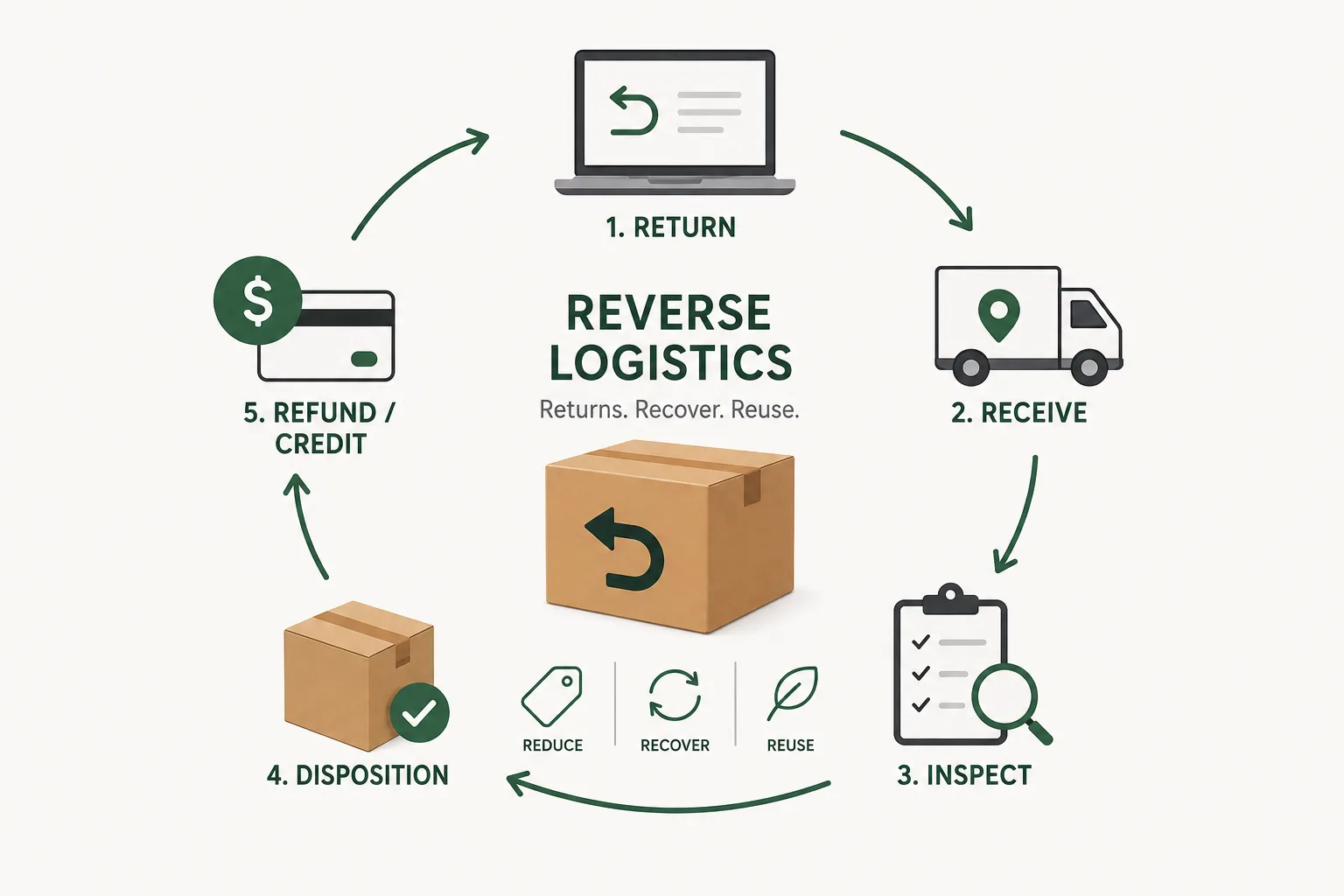
A structured reverse logistics process brings order to the chaos. It ensures every return is handled consistently and efficiently, maximizing value recovery and maintaining customer satisfaction. The process can be broken down into five core stages.
1. Initiate the Return (RMA)
The process begins when the customer requests a return. Best practice is to use a Return Merchandise Authorization (RMA) system. The RMA captures crucial information, such as the reason for the return and the product’s condition, which helps in planning the subsequent steps.
2. Ship and Receive the Return
This stage involves the physical transportation of the product from the customer back to your warehouse or a designated returns processing center. Upon arrival, the item must be logged and tracked to maintain visibility throughout the internal process.
3. Inspect and Triage
Once received, every item must be inspected to determine its condition. Is it in new, sellable condition? Is the packaging damaged? Is the product defective? This triage step is critical for deciding the product’s fate and routing it to the correct disposition path.
4. Determine Disposition
Based on the inspection, a decision is made on how to handle the product to recover the most value. This is often guided by the "5 R's" of reverse logistics:
- Resell: If the item is in new condition, it can be restocked and sold at full price.
- Refurbish/Repair: Products that are lightly used or have minor defects can be repaired, repackaged, and sold, often on a secondary market.
- Recycle: For products that are damaged beyond repair, materials can be recovered and recycled, supporting sustainability goals.
- Return to Vendor: If the product was defective due to a supplier issue, it may be returned to the original vendor for credit.
- Restock: This involves putting sellable items back into your active inventory.
5. Financial Reconciliation
The final step is to close the loop with the customer by issuing a refund, credit, or replacement. Internally, financial records must be updated to reflect the returned inventory and associated costs.
How an ERP Transforms Your Reverse Logistics Workflow
Managing the complexity of reverse logistics with spreadsheets or disconnected systems is a recipe for errors and inefficiency. A modern, cloud-based ERP platform centralizes data and automates workflows, providing the end-to-end visibility required to optimize the entire process.
Here’s how an ERP system helps:
- Centralized Data Management: An ERP provides a single source of truth, connecting sales orders, customer data, inventory levels, and financial records. When a return is initiated, all relevant information is in one place, eliminating data silos and manual lookups.
- Automated RMA and Returns Processing: ERP systems can automate the entire returns management process. You can generate RMAs directly from the original sales order, track the return status in real-time, and set up standardized workflows for inspection and disposition.
- Accurate Inventory Control: A key function of an ERP is precise inventory tracking. Returned goods can be placed in a virtual 'quarantine' location upon receipt, keeping them separate from sellable stock. After inspection, the ERP updates the item's status—whether it's being restocked, sent for refurbishment, or scrapped—ensuring your inventory counts are always accurate.
- Integrated Financials: The ERP automatically handles the financial side of a return. It can process customer refunds or credits, update your general ledger, and help you track the total cost of your returns program, providing crucial data for profitability analysis.
- Analytics and Reporting: By capturing data at every stage, an ERP provides powerful insights. You can analyze return rates by product, identify recurring quality issues, and understand the true financial impact of your returns. This data-driven approach allows you to address root causes and continuously improve your operations.
Don’t let product returns drain your profitability. By implementing a structured reverse logistics process powered by a unified ERP system, you can reduce costs, improve efficiency, and enhance customer satisfaction. To learn more about how a modern ERP can help you gain control over your operations, explore our ERP solution. user guide or contact us today.