What Is Enterprise Resource Planning (ERP)?
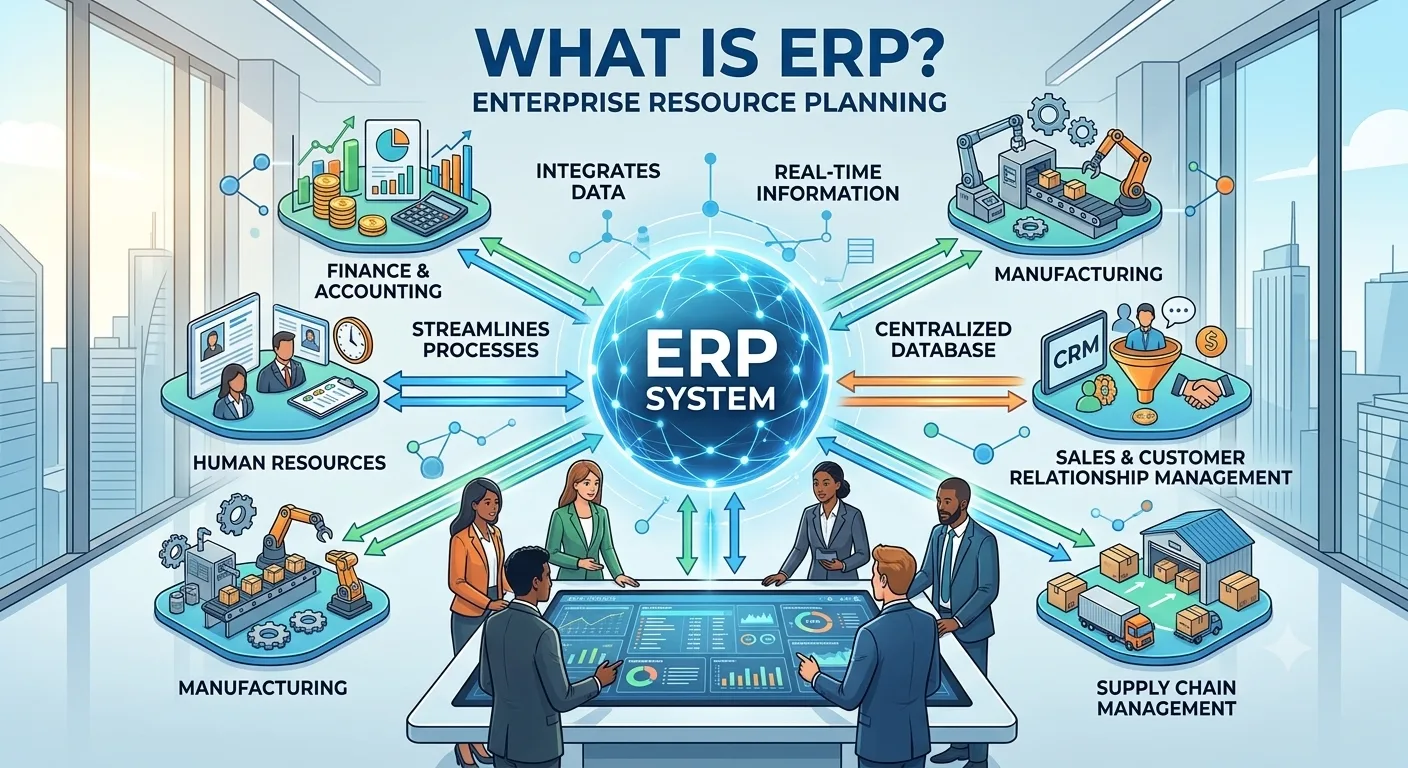
If you're managing a growing manufacturing business, you're likely juggling disconnected systems: spreadsheets for inventory, accounting software for financials, and perhaps another tool for managing sales orders. Enterprise Resource Planning (ERP) software replaces this patchwork of applications with a single, integrated system that manages all core business processes in real time.
Think of an ERP as the central nervous system of your operation. It provides a unified, continuously updated view of everything from raw materials and production capacity to sales orders and payroll. By creating a single source of truth, an ERP system eliminates data silos, automates repetitive tasks, and allows information to flow seamlessly between departments such as finance, manufacturing, and supply chain.
This guide explains what an ERP system is, the essential functions it provides for manufacturers, and the tangible benefits of adopting a modern, cloud-based platform.
Core ERP Modules for Manufacturers
An ERP system is typically composed of integrated modules, each designed to manage a specific business function. While companies can choose the modules they need, manufacturers and product-based brands benefit the most from a system that connects the shop floor to the top floor.
Manufacturing and Production Management
This is the heart of an ERP system for any company that makes physical products. This module helps manage and automate the entire production lifecycle.
- Bill of Materials (BOM): Defines the recipe for a product, by detailing all raw materials, components, and assemblies required for a finished good.
- Production Planning & Scheduling: Balances customer demand with production capacity to create efficient schedules, ensuring materials and resources are available when needed.
- Shop Floor Control (MES): Tracks work orders, machine performance, and labor in real time, providing visibility into every stage of the production process.
Inventory and Supply Chain Management
Effective inventory control is critical for preventing stockouts, minimizing carrying costs, and ensuring production lines keep moving. An ERP provides a holistic view of your inventory and supply chain.
- Inventory Control: Offers real-time visibility into stock levels across all locations, from raw materials to finished goods, helping to prevent both stockouts and overstocking.
- Procurement: Automates the purchasing process of purchasing raw materials, from creating purchase orders to tracking supplier performance.
- Warehouse Management (WMS): Optimizes warehouse operations, including receiving, put-away, picking, packing, and shipping to improve accuracy and efficiency.
Finance and Accounting
An ERP's finance module is essential for managing a company's financial health. It integrates financial data from every department, providing a complete picture of profitability.
- General Ledger (GL): Serves as the central hub for all financial data, managing accounts payable, accounts receivable, and financial reporting.
- Costing: Tracks all production-related costs, including materials, labor, and overhead, to accurately calculate the cost of goods sold (COGS) and determine product profitability.
- Financial Reporting & Analytics: Generates real-time financial statements and dashboards, enabling leaders to monitor key performance indicators (KPIs) and make data-driven decisions.
Sales and Order Management
This function connects your customer-facing activities with your back-end operations, ensuring a smooth order-to-cash cycle.
- Order Management: Streamlines the entire process from sales quote to fulfillment, tracking orders from receipt to delivery.
- Customer Relationship Management (CRM): Manages customer interactions and data in one place, helping to improve sales performance and customer service.
The Benefits of a Unified ERP System
Moving from disconnected spreadsheets and standalone software to an integrated ERP system delivers significant operational advantages. The goal is to improve data visibility, streamline processes, and make smarter decisions faster.
- Increased Efficiency and Automation: By automating repetitive tasks such as data entry and order processing, an ERP frees up your team to focus on higher-value activities. This reduces manual errors and streamlines workflows across the organization.
- Real-Time Data for Better Decision-Making: With a centralized database, everyone works from the same up-to-date information. This gives leaders real-time insights into business performance, enabling more agile and informed strategic planning.
- Lower Operational Costs: A well-implemented ERP system can reduce costs by optimizing inventory levels, improving production efficiency, and reducing administrative overhead. By preventing stockouts and minimizing waste, you protect your profit margins.
- Enhanced Visibility and Traceability: For manufacturers, an ERP provides end-to-end visibility across the supply chain, from raw material sourcing to final delivery. This is crucial for managing quality control and achieving full lot traceability—a must for regulatory compliance.
- Improved Scalability: As your business grows, operational complexity grows with it. A modern ERP system is designed to scale, allowing you to add new users, products, and sales channels without being held back by your software.
Cloud ERP vs. On-Premise: What's the Difference?
When selecting an ERP, one of the biggest decisions is the deployment model: cloud-based or on-premise. While traditional on-premise systems require you to host and manage the software on your own servers, cloud ERP is hosted by the provider and accessed via the internet.
For most small-to-mid-sized manufacturers, cloud ERP is the clear winner. Here's why:
- Lower Upfront Costs: Cloud ERP operates on a subscription model (SaaS), eliminating the need for large capital investments in hardware and IT infrastructure.
- Faster Implementation: Cloud systems can be deployed much faster than on-premise solutions, which can take several months to get fully operational.
- Accessibility and Flexibility: Teams can access a cloud ERP from anywhere with an internet connection, making it ideal for remote or distributed workforces.
- Automatic Updates and Maintenance: The provider handles all system maintenance, security, and updates, freeing your IT resources to focus on strategic initiatives instead of managing software.
Today, cloud-based systems account for the vast majority of new ERP implementations, driven by their flexibility, cost-effectiveness, and ease of use.
An ERP system is no longer a luxury reserved for large corporations; it's a foundational tool for any manufacturer or brand serious about growth. By integrating your core operations onto a single platform like ianaiERP, you create a more efficient, resilient, and data-driven business. To learn more about how our platform can help you streamline your operations, explore our user guide or contact us for a demo.