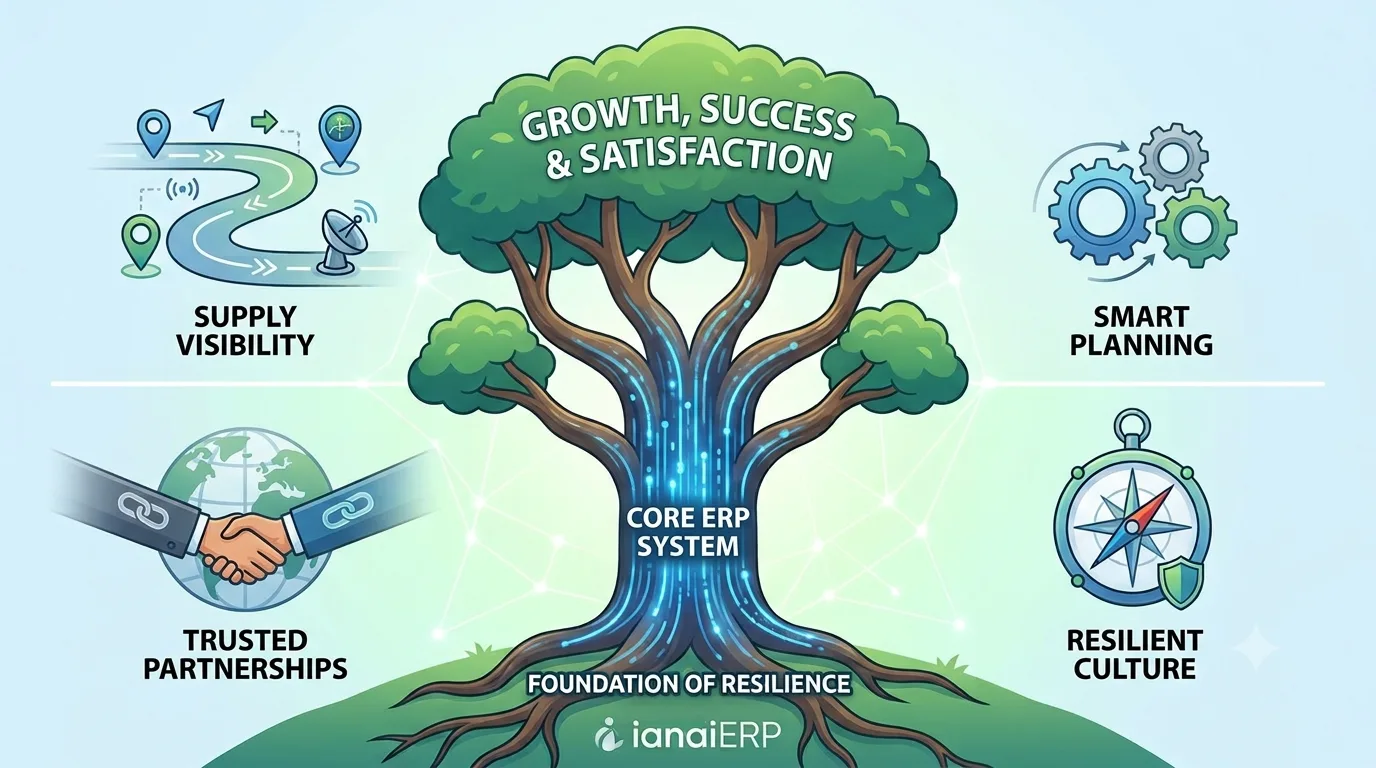
The Blueprint for a Strong Supply Chain
For manufacturers and brands, a supply chain is more than just logistics—it’s the circulatory system of the business. When it’s healthy, products flow, customers are happy, and growth follows. But when it’s weak, the entire enterprise is at risk. So, what makes a supply chain strong? It’s not about having the lowest costs or the leanest inventory anymore. A truly strong supply chain is built on a foundation of resilience, designed to anticipate, adapt, and recover from disruptions.
Recent years have exposed the fragility of global supply networks, with disruptions becoming the norm rather than the exception. Companies now face a relentless drumbeat of weather events, geopolitical tensions, and material shortages. This new reality demands a strategic shift away from pure efficiency toward a more balanced model. This post explores the four pillars of a modern, resilient supply chain: end-to-end visibility, integrated planning, strategic supplier relationships, and a culture of resilience.
Gain End-to-End Visibility: You Can't Manage What You Can't See
End-to-end visibility is the ability to track materials, components, and finished products in near real-time, from your Tier-2 suppliers to your end customers. Without it, you’re operating in the dark. Minor delays become major bottlenecks because you lack the information to respond proactively. A lack of visibility exacerbates risks, leading to stockouts, excess inventory, and poor decision-making.
Why Visibility is Non-Negotiable
- Better Risk Management: Visibility helps you spot potential disruptions early, whether it's a delayed shipment, a supplier bottleneck, or a sudden demand spike. This allows you to mitigate issues before they cascade through your network.
- Improved Efficiency: Real-time insights into inventory levels, production status, and logistics help you reduce waste, optimize transportation, and cut operational costs.
- Enhanced Customer Satisfaction: When you can accurately track orders and provide reliable delivery estimates, you build trust and improve the customer experience.
A modern ERP system is central to achieving this level of transparency. By integrating data from procurement, manufacturing, inventory, and logistics into a single source of truth for the business, an ERP provides the comprehensive view needed to manage a complex supply chain effectively.
Master Integrated Planning: Connecting Strategy to Execution
A strong supply chain doesn't just react; it anticipates. Integrated supply chain planning (SCP) is the process of aligning demand, supply, and inventory management into a single, cohesive strategy. It breaks down the silos that often exist between sales, operations, and finance, ensuring everyone is working from the same playbook.
Key Components of Integrated Planning
- Demand Forecasting: Use historical data, market trends, and even AI-powered analytics to create more accurate demand forecasts. This helps prevent both overstocking and stockouts.
- Supply Planning: Match your production and procurement plans to the demand forecast. This involves assessing your capacity, your suppliers' capabilities, and lead times to create a realistic plan.
- Inventory Optimization: Integrated planning helps you balance the need for buffer stock with the cost of carrying inventory. Instead of holding excess inventory everywhere, you can strategically place safety stock where it will be most effective at absorbing volatility.
When planning is integrated, your entire operation becomes more agile. You can respond faster to market changes, reduce lead times, and improve communication across your entire network.
Cultivate Strategic Supplier Relationships: More Than Just a Transaction
Your suppliers are the backbone of your supply chain. Treating these relationships as purely transactional is a critical mistake. A strong supply chain depends on collaborative, long-term partnerships built on trust, transparency, and shared goals. Strategic Supplier Relationship Management (SRM) shifts the focus from price-based negotiations to value-driven collaboration.
Building a Stronger Supplier Network
- Diversify Your Base: Relying on a single supplier for a critical component creates a single point of failure. Building a diverse supplier network across different geographic regions is a core tenet of resilience.
- Foster Collaboration: Work closely with key suppliers on everything from product design to demand forecasting. When suppliers have visibility into your plans, they can better align their own operations, improving reliability and responsiveness.
- Share Data and Align on Metrics: Use a shared data platform, like an ERP with a supplier portal, to improve communication and track performance. Aligning on key metrics ensures everyone is working toward the same objectives, from on-time delivery to quality standards.
When disruptions occur, strong supplier relationships are often what make the difference. A partner who understands your business is more likely to work with you to find solutions than a vendor you’ve squeezed for every last penny.
Embed Resilience: Prepare for the Unexpected
Supply chain resilience is the ability to withstand, adapt to, and recover quickly from disruptions. It's not about preventing every possible problem, but about building a system that can absorb shocks and maintain operations when things go wrong. Resilience isn't a one-time project; it's an ongoing practice that must be woven into your company culture and daily operations.
Strategies for Building a Resilient Supply Chain
- Conduct Risk Assessments: Regularly map your supply chain to identify potential vulnerabilities. This includes not just your direct suppliers but their suppliers as well.
- Design for Flexibility: Where possible, use standardized components that can be sourced from multiple suppliers. This avoids getting locked into a single vendor for a custom part.
- Scenario Planning: Use digital tools to simulate the impact of potential disruptions, like a port shutdown or a supplier outage. This allows you to test your contingency plans and identify weaknesses before a real crisis hits.
- Invest in Technology: Modern, cloud-based ERPs are essential for building resilience. They provide the real-time data, predictive analytics, and collaborative tools needed to manage today's complex supply networks.
A strong supply chain is a powerful competitive advantage. By focusing on visibility, integrated planning, strategic supplier relationships, and a culture of resilience, you can build a supply chain that not only survives but thrives in an unpredictable world.
Ready to build a more resilient and agile operation? Explore our resources at ianaiERP or contact us to learn how an AI-native ERP can transform your supply chain.