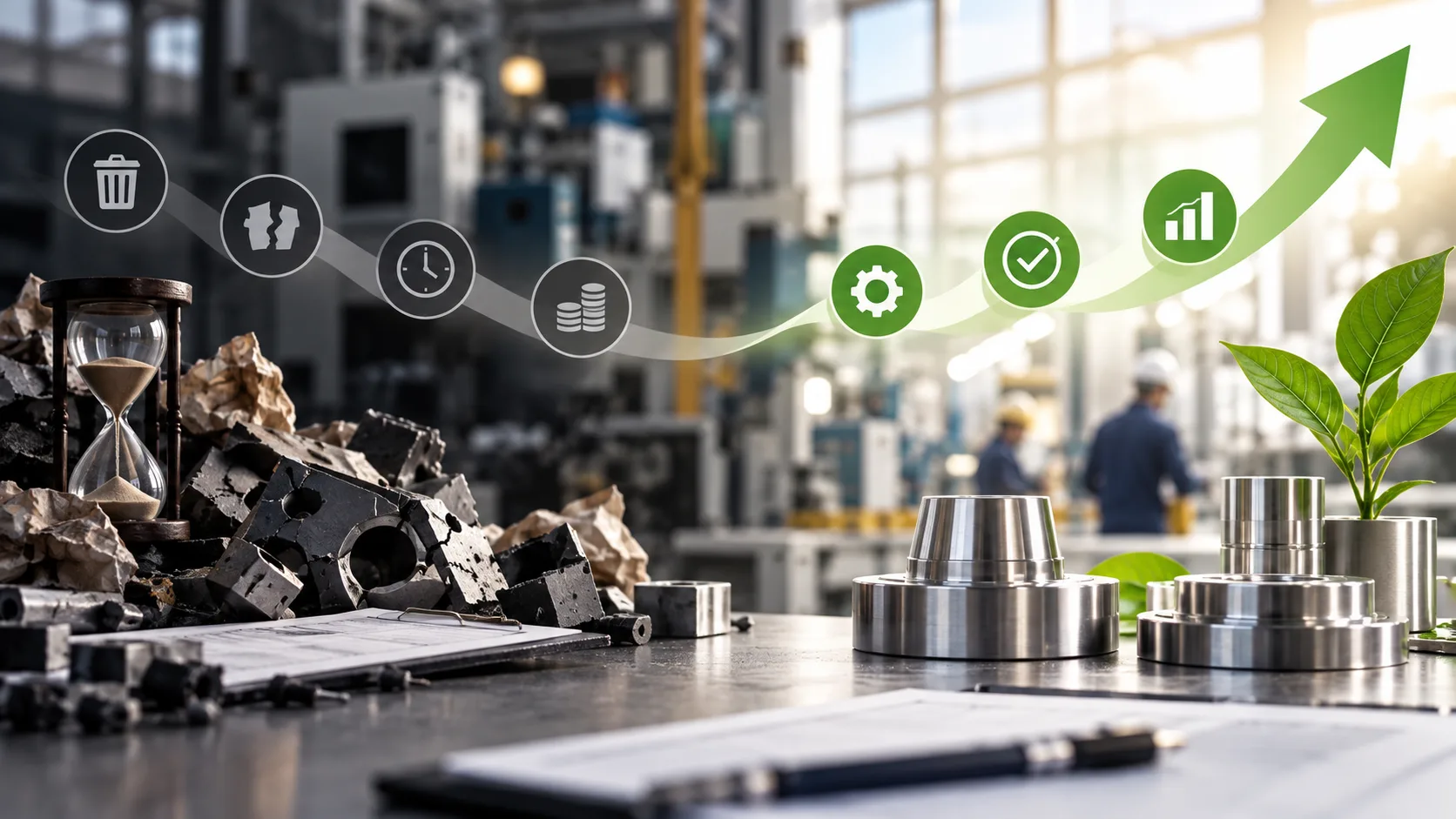
What Is the Cost of Quality (COQ)?
Many manufacturers think of quality costs as the budget for their inspection team or the price of a testing machine. But the true Cost of Quality (COQ) is far broader—it’s the total sum of money spent ensuring your products meet standards, plus the costs incurred when they don't. For many companies, the cost of poor quality alone can be a significant financial drain, with some estimates putting it at 15-20% of sales revenue.
This is the cost of your “hidden factory”—all the work you do that isn't part of making a good product the first time. It's the time spent on rework, the materials thrown in the scrap bin, and the hours spent handling customer complaints. Effectively, it’s the price you pay for not getting it right on the first try.
Understanding COQ is the first step toward controlling it. The framework is built on a simple but powerful idea known as the 1-10-100 rule. It states that it might cost $1 to prevent a defect, $10 to correct it internally, and $100 to fix it once it has reached the customer. This principle highlights the immense value of investing in proactive quality measures.
The Four Categories of Quality Costs
The Cost of Quality methodology breaks expenses down into four distinct categories. These are typically grouped into two pairs: the Cost of Good Quality (proactive investments) and the Cost of Poor Quality (reactive expenses).
Cost of Good Quality (Conformance Costs)
These are the strategic investments you make to prevent defects from happening in the first place. The goal is to build quality into your processes.
- Prevention Costs: Any cost incurred to prevent or minimize defects before they can occur. This is the most effective type of quality spending. Examples include employee training, quality planning, statistical process control (SPC), supplier evaluation, and regular machine maintenance.
- Appraisal Costs: Costs associated with measuring and monitoring activities to ensure products and services meet quality standards. Think of these as the costs of detection. Examples include inspections (incoming materials, in-process, and final product), testing equipment, and quality audits.
Cost of Poor Quality (Non-Conformance Costs)
These are the costs your business incurs as a result of failures. They represent waste and inefficiency.
- Internal Failure Costs: The costs of defects that are found before the product is delivered to the customer. While not ideal, catching failures here is far cheaper than letting them escape the factory. Examples include scrap material, rework labor, re-testing, and production downtime caused by a quality issue.
- External Failure Costs: The most expensive and damaging costs, incurred when a defect is discovered after the customer receives the product. These failures directly impact your reputation and profitability. Examples include warranty claims, product returns, recall expenses, complaint handling, and lost sales due to a damaged reputation.
Why Tracking Cost of Quality Is Critical
Measuring COQ isn't just an accounting exercise; it's a strategic tool that turns quality management from a perceived cost center into a driver of profitability. When you track these costs, you gain the ability to:
- Identify Inefficiencies: High internal failure costs might point to a problem with a specific machine or a gap in employee training. High external failure costs could signal a design flaw or a weak supplier.
- Make Data-Driven Decisions: Should you invest in a new CNC machine or a more robust training program? Your COQ data provides the answer. Shifting spending from failure costs to prevention costs delivers a powerful ROI.
- Improve Profitability: Reducing scrap, rework, and warranty claims directly boosts your bottom line. Experts estimate that a mature quality system can reduce the total Cost of Poor Quality to under 10% of revenue.
- Enhance Customer Satisfaction: By catching defects internally and preventing them from happening in the first place, you deliver a better product, which builds trust and loyalty.
How an ERP System Measures and Reduces Cost of Quality
Trying to track the four categories of COQ with spreadsheets and disconnected systems is nearly impossible. The data lives in different departments—production, finance, sales, and purchasing. A modern Enterprise Resource Planning (ERP) system provides the single source of truth needed to measure and manage COQ effectively.
Here’s how a platform like ianaiERP helps:
-
Capture Internal Failure Costs: An ERP tracks production data in real time. You can precisely measure scrap rates for a specific production run, assign labor costs to rework orders, and identify which machines or processes are contributing the most to your work in process inventory variances.
-
Trace External Failures to the Source: When a customer returns a product, robust lot tracking capabilities allow you to trace the defect back to the exact batch of raw material, the machine it was run on, and the date it was produced. This helps you perform root cause analysis and prevent the issue from recurring.
-
Manage Prevention and Appraisal Costs: You can manage equipment maintenance schedules, track supplier performance ratings, and document employee certifications all within the ERP. This centralizes your prevention efforts and makes appraisal activities like quality inspections a seamless part of the production workflow.
-
Generate Unified Reports: By integrating data from across the business, an ERP can generate comprehensive COQ reports. This gives leadership a clear, financial view of quality performance, highlighting trends and pinpointing the most impactful areas for improvement.
Understanding your Cost of Quality is the first step toward transforming your operations. By leveraging a unified ERP system to track these metrics, you can systematically reduce waste, lower costs, and build a stronger, more profitable business.
To learn more about how ianaiERP provides the visibility you need to control costs and improve quality, explore our platform features or contact us to speak with an expert.