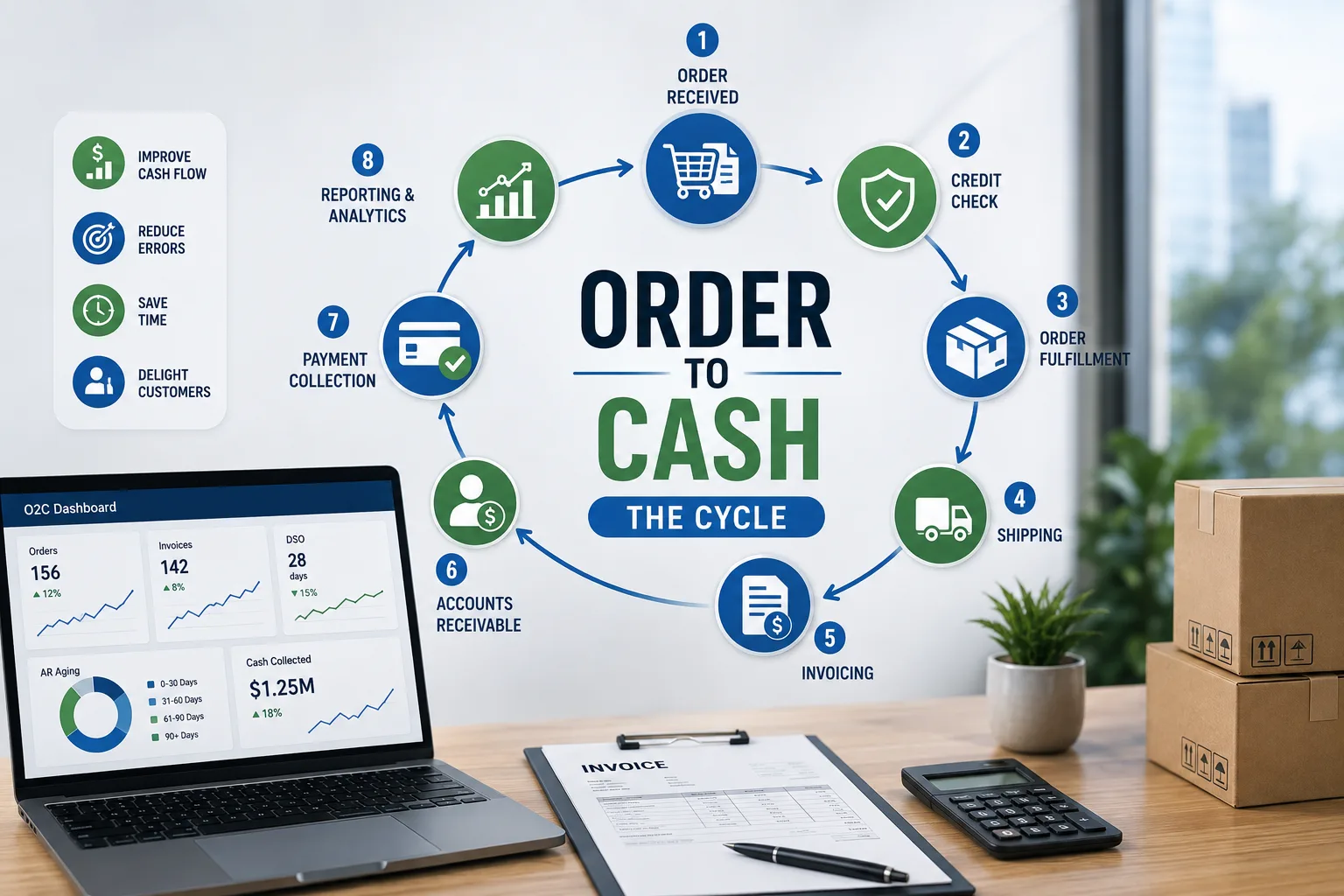
What Is the Order to Cash (O2C) Cycle?
The Order to Cash (O2C) cycle is the entire, end-to-end business process that covers all the steps from receiving a customer order to processing the payment. Often called the O2C or OTC cycle, it’s the operational lifeblood of any company that sells products or services. A smooth O2C process ensures revenue is recognized quickly, customers are happy, and cash flow remains healthy. Conversely, a clunky, inefficient O2C cycle can lead to delayed payments, frustrated customers, and wasted resources.
This critical process isn't the responsibility of a single department. It's a cross-functional workflow that touches sales, inventory, fulfillment, and finance. Optimizing the full cycle requires breaking down data silos and ensuring every team is working from a single source of truth. This post will walk through the key steps of the O2C cycle, identify common bottlenecks, and explain how a modern ERP system can streamline the entire process.
The 8 Key Steps of the Order to Cash Cycle
While the exact details can vary by business, the O2C process generally follows eight distinct steps. Each step presents an opportunity for errors and delays if not managed correctly.
1. Order Management
This is the starting point. An order is received from a customer, whether through an e-commerce platform, an EDI transaction, a salesperson, or direct email. The order must be accurately entered into the system, capturing the correct items, quantities, pricing, and shipping information.
2. Credit Management
For B2B transactions, the next step is often a credit check. Before committing inventory and fulfilling the order, the finance team must assess the customer's creditworthiness to manage the risk of non-payment. A slow or inconsistent credit approval process can stall otherwise good orders and create a bottleneck right from the start.
3. Order Fulfillment
Once an order is approved, it's sent to the warehouse for fulfillment. This involves picking the correct items from inventory, packing them for shipment, and preparing them for dispatch. This step is entirely dependent on accurate, real-time inventory data. Without it, you risk selling products you don't have, leading to backorders and customer dissatisfaction.
4. Shipping & Logistics
With the order packed, the next step is shipping. This includes generating shipping labels, creating packing slips and other documentation, and handing the package off to a carrier. Tracking information needs to be captured and communicated to the customer to ensure transparency.
5. Invoicing
As soon as the order ships, an invoice should be generated and sent to the customer. Delays between shipping and invoicing directly lengthen your Days Sales Outstanding (DSO) and slow down cash flow. The invoice must be accurate, reflecting the correct items, quantities, prices, taxes, and payment terms to avoid disputes.
6. Accounts Receivable Management
After the invoice is sent, the accounts receivable (AR) process begins. The open invoice is recorded in the general ledger and tracked until payment is received. This involves monitoring aging reports and identifying overdue accounts.
7. Payment Collection
This is the "cash" part of the cycle. The finance team collects and applies the customer's payment to the corresponding invoice. This step can be complicated by various payment methods, remittance advice that doesn't match the payment, and deductions or short payments.
8. Reporting and Analytics
Finally, analyzing O2C performance is crucial for continuous improvement. Key performance indicators (KPIs) like Days Sales Outstanding (DSO), invoice accuracy, and order processing time help identify bottlenecks and measure the health of your cash flow.
Common Pain Points in the O2C Process
For many growing businesses, the O2C cycle is held together by manual processes, spreadsheets, and disconnected software. This approach is prone to errors and inefficiencies that can stifle growth.
Common challenges include:
- Manual Data Entry Errors: Manually entering orders, customer details, and pricing information is a major source of errors that can lead to incorrect shipments, flawed invoices, and customer disputes.
- Poor Inventory Visibility: When sales and warehouse systems are disconnected, the sales team may sell out-of-stock items. This misalignment creates a poor customer experience and operational chaos.
- Delayed Invoicing: Inefficiencies between the warehouse shipping an order and the finance team sending an invoice can add days or even weeks to the payment cycle, severely impacting cash flow.
- Invoicing Errors: Incorrect pricing, taxes, or shipping charges on an invoice create disputes that delay payment and require manual effort to resolve.
- Inefficient Collections: Without a systematic way to track receivables and manage collections, invoices can easily slip through the cracks, leading to an increase in bad debt.
- Lack of Visibility: When data is siloed across different departments, no one has a clear, real-time view of an order's status. This makes it difficult to answer customer inquiries and proactively address issues.
How an ERP Optimizes Your Order to Cash Cycle
A modern, cloud-based ERP system is designed to solve these challenges by unifying every step of the Order to Cash cycle on a single platform. By creating a single source of truth, an ERP streamlines the entire process, from order to payment.
Automation Reduces Manual Work
An ERP automates repetitive tasks like order entry, credit checks, invoice generation, and payment reminders. This not only reduces costly human errors but also frees up your team to focus on more strategic activities, like customer service and financial analysis.
Centralized Data Provides Real-Time Visibility
With an ERP, your sales, warehouse, and finance teams all work from the same live data. When a sales order is created, inventory levels are instantly updated. When an order is shipped, the system can automatically trigger an invoice. This end-to-end visibility ensures everyone from the sales rep to the controller has an accurate, up-to-the-minute view of order status and inventory availability.
Faster Fulfillment and Invoicing
By integrating order management directly with inventory and fulfillment modules, an ERP accelerates the pick, pack, and ship process. The seamless flow of information ensures that as soon as a shipment is confirmed, the accounting module is notified to generate and send a precise invoice, dramatically reducing the time it takes to get paid.
Improved Financial Control
An ERP provides robust accounts receivable tools that make it easy to track outstanding invoices, manage collections, and apply payments. Automated workflows can send payment reminders, flag overdue accounts, and simplify the bank reconciliation process, leading to a significant reduction in Days Sales Outstanding (DSO).
Enhanced Customer Experience
A streamlined O2C process directly improves customer satisfaction. Accurate orders, on-time shipments, and transparent communication build trust and loyalty. When customers have questions about their order status or billing, your team can provide fast, accurate answers because all the information is in one place.
Optimizing your Order to Cash cycle is fundamental to scaling your business efficiently. By replacing fragmented, manual processes with a unified ERP system, you can accelerate cash flow, reduce operational costs, and deliver a superior customer experience.
To learn more about how ianaiERP can streamline your operations from order to cash, explore our platform features in the User Guide or contact us for a personalized demo.