What is the Procure-to-Pay Cycle?
The procure-to-pay (P2P) cycle is the complete, end-to-end process that covers everything from identifying the need for goods or services to issuing the final payment to the supplier. It's a critical operational and financial workflow for any manufacturer or brand that buys raw materials, components, or finished goods. A well-managed P2P process ensures you get the right materials, at the right price, at the right time, and that your suppliers are paid accurately and on schedule.
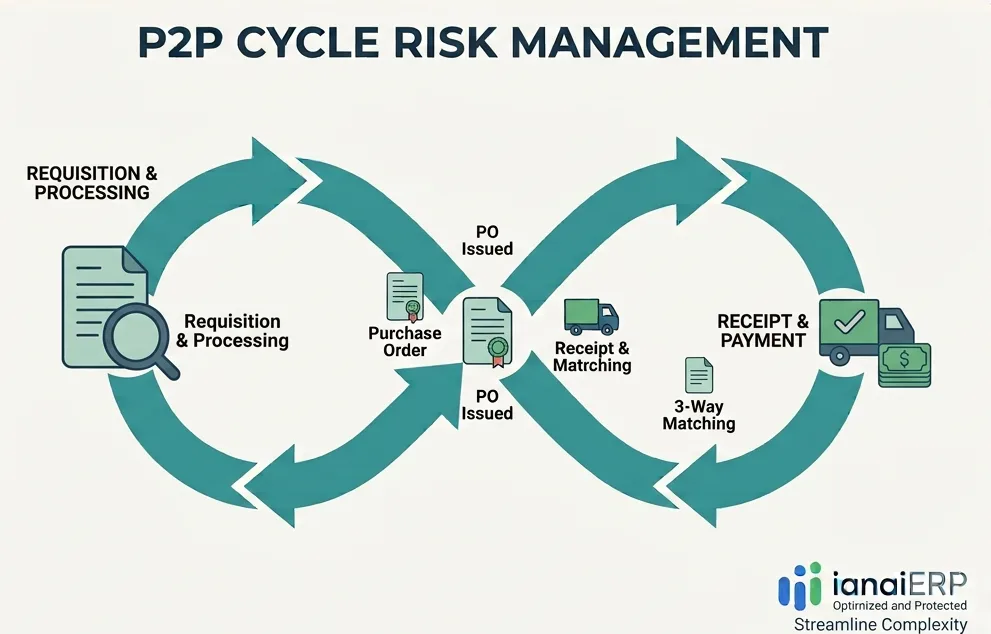
While the exact details can vary, the P2P cycle generally includes these core steps:
- Need Identification & Requisition: A department identifies a need for goods or services and creates a formal purchase requisition.
- Requisition Approval: The purchase requisition is routed through a predefined workflow for management approval.
- Supplier Selection & Purchase Order (PO): Once approved, the procurement team selects a vendor and issues a formal purchase order (PO), a legally binding document detailing the purchase.
- Goods Receipt: The supplier delivers the goods or services. The receiving team inspects the delivery, verifies quantities against the PO, and formally records the receipt of goods.
- Invoice Processing: The supplier submits an invoice for payment. The accounts payable (AP) department receives and enters this invoice into the financial system.
- Invoice Matching & Approval: The AP team performs a three-way match, comparing the purchase order (PO), goods receipt, and supplier invoice to ensure consistency in quantity, price, and terms. If they match, the invoice is approved for payment.
- Payment: The approved invoice is paid according to the agreed-upon terms, and the transaction is recorded in the general ledger.
Why an Optimized Procure-to-Pay Cycle Matters
For growing businesses, a manual P2P process—often managed with spreadsheets, emails, and paper documents—quickly becomes a major bottleneck. It is slow, prone to errors, and lacks visibility. Optimizing and automating the procure-to-pay cycle provides significant strategic advantages.
- Reduced Costs: Manual invoice processing is incredibly expensive. Industry benchmarks show the cost to manually process a single invoice ranges from $12 to $30. Automation can slash these costs by over 80%. This does not even include the savings from capturing early payment discounts, which manual systems often miss.
- Improved Spend Visibility: A fragmented process makes it impossible to get a clear, real-time view of company spending. An automated P2P cycle centralizes purchasing data, giving finance and operations leaders a clear picture of cash flow and commitments.
- Stronger Supplier Relationships: Automation ensures suppliers are paid accurately and on time, which builds trust and goodwill. A transparent, predictable payment process makes you a preferred customer, which can lead to better terms and priority service when supply chains are tight.
- Enhanced Compliance and Fraud Prevention: Manual processes increase the risk of maverick spending (purchases made outside of approved channels) and fraudulent invoices. An automated system with built-in approvals and automated three-way matching is a powerful defense against errors and fraud.
Common P2P Challenges for Growing Businesses
As manufacturers and brands scale, the cracks in a manual procure-to-pay process begin to show. These challenges drain resources, slow down operations, and put financial controls at risk.
- Manual Data Entry: A huge portion of AP and procurement time is spent on manual data entry—keying in requisitions, creating POs, and entering invoice data. This is not only inefficient, but also a primary source of costly errors. Research shows that nearly 39% of manually processed invoices contain at least one error.
- Slow Approval Cycles: Chasing down managers for approvals via email or paper is a common bottleneck. These delays can hold up critical material orders, slow down production, and cause you to miss out on valuable early payment discounts.
- Lack of Visibility: Without a central system, answering basic questions like “Did we receive the shipment from Supplier X?” or “Has invoice Y been paid?” often requires digging through emails and spreadsheets. This lack of visibility makes cash flow forecasting and budget management a guessing game.
- Difficult Invoice Reconciliation: The three-way match is a critical control point, but doing it manually is tedious. Discrepancies between the purchase order (PO), goods receipt, and invoice create exceptions that require significant time to investigate and resolve.
How an ERP Transforms Your Procure-to-Pay Cycle
A modern, cloud-based ERP system like ianaiERP is designed to solve these challenges by integrating and automating the entire procure-to-pay cycle within a single platform. Instead of a series of disconnected manual steps, you get a seamless, digital workflow.
Automated Requisitions and Approvals
An ERP digitizes the start of the process. Employees can create purchase requisitions from anywhere, and the system automatically routes them to the correct approver based on predefined rules (e.g., by department, dollar amount, or project). This eliminates email chains and ensures all purchases are properly authorized before a PO is ever created.
Centralized Purchase Order Management
Once a requisition is approved, the system can generate a purchase order automatically. All POs are managed in a central hub, linked to suppliers, items, and requisitions. This creates a clear audit trail and makes it easy for anyone in operations or finance to check the status of an order. For more complex needs, an ERP can manage your Bill of Materials to ensure you're ordering the right components every time.
Streamlined Goods Receiving
When a shipment arrives, the receiving team can pull up the corresponding PO on a tablet or computer. They can record quantities received directly in the ERP, noting any partial shipments or damages. This instantly updates inventory levels and makes the receipt information available to the accounts payable team for matching.
Automated Three-Way Matching
This is where an ERP delivers massive efficiency gains. When a supplier invoice arrives, the system automatically compares it against the PO and the goods receipt record. If all three documents align, the invoice can be approved for payment with zero manual touches. If there's a mismatch, the system flags the exception for review, so your team only spends time on the problem invoices.
Integrated Payments and Financial Visibility
Approved invoices flow directly into the accounts payable module, ready for payment. The ERP provides a complete, real-time view of spending, liabilities, and cash flow. Finance leaders can see what has been ordered, what has been received, and what is due for payment, all in one place. This level of inventory tracking and financial control is impossible with manual systems.
By automating the procure-to-pay cycle, you transform it from a tactical, administrative burden into a strategic asset. Your team is freed from tedious manual work, allowing them to focus on higher-value activities such as negotiating with suppliers, analyzing spend data, and optimizing cash flow.
Ready to move beyond spreadsheets and streamline your operations? Learn more about how ianaiERP provides a single source of truth for your business in our user guide or contact us for a demo.